
April Showers Often Reveal Roofing Problems That Developed Quietly During Winter
Spring rainfall across the East Midlands often exposes roofing weaknesses that have gradually developed during colder winter months. Strong winds, freezing temperatures, and repeated cycles of moisture can slowly loosen ridge mortar, flashing around chimneys, and the nails holding tiles in place.
When April rain arrives after months of colder weather, water naturally finds any weaknesses hidden within the roofing structure. Homeowners frequently discover problems only when moisture begins travelling beneath tiles and reaching vulnerable areas of the roof surface.
Fortunately, many early warning signs can be spotted safely from the garden or driveway without climbing onto ladders. A careful ground level inspection often reveals slipped tiles, sagging ridge lines, loose flashing around chimneys, or gutters struggling to carry away rainwater efficiently.
Roofs across Mansfield and the wider Nottinghamshire region are designed to withstand decades of weather exposure when installed correctly. However, even durable slate and tile roofs gradually show signs of wear after years of exposure to wind, rain, frost, and sunlight.
April’s unsettled weather conditions often provide the first clear opportunity to observe how a roof performs during heavy rainfall.
The educational illustration below shows the visual difference between a healthy roof structure and potential warning signs homeowners should watch carefully.

The Ridge Line Is Often the Most Important Feature When Inspecting Your Roof
When observing a roof from ground level, the ridge line along the top of the building provides valuable clues about structural stability. On a well-constructed roof the ridge should appear straight and consistent across the entire width of the property.
A straight ridge usually indicates that the timber rafters beneath the tiles are supporting the roof evenly and correctly. When that line begins to dip, curve slightly, or appear uneven, it can sometimes signal movement within the timber framework beneath the tiles.
Older properties occasionally develop minor curves over many decades without serious structural consequences, particularly where traditional carpentry methods were used. However, a newly visible dip or sag developing over a short period may indicate structural movement worth investigating.
Because the ridge line runs along the highest point of the roof structure, even small changes in shape become easier to notice from a distance. Standing further back in the garden or driveway often helps reveal these subtle changes in alignment more clearly.
Examining the ridge line first provides a useful starting point before looking more closely at individual tiles and other roof components.
Evenly Aligned Roof Tiles Usually Indicate a Healthy Roofing Surface
After observing the ridge line, the next step involves studying the overall alignment of tiles or slates covering the roof surface. Tiles should appear evenly spaced and follow a regular pattern that remains consistent across the entire slope.
When tiles shift or slip from their original position, small gaps may develop between overlapping layers designed to keep water out. These gaps allow wind-driven rain to reach the felt and timber battens beneath the outer tile layer.
Although a single slipped tile may appear harmless at first glance, repeated rainfall can gradually push moisture deeper into the roof structure. Over time this moisture may affect insulation materials, timber battens, or plasterboard ceilings within the property.
During heavy spring showers the pattern of water flowing across the roof can highlight these small irregularities. Rainwater may collect temporarily around lifted tiles or travel beneath overlapping edges where the protective layer has shifted.
Observing tile alignment carefully after rainfall often provides valuable clues about areas requiring professional attention.
Chimney Flashing Plays a Crucial Role In Preventing Rainwater Entering The Roof
Where roof tiles meet vertical structures such as chimney stacks, special waterproofing materials are required to prevent leaks. These protective seals are known as flashing and are usually formed from flexible sheets of lead.
Lead flashing is carefully shaped to overlap both the roof tiles and the brickwork of the chimney stack. This design allows rainwater to flow naturally back onto the roof surface rather than entering small gaps between tiles and masonry.
Because chimneys interrupt the smooth slope of the roof, they represent one of the most vulnerable areas for water penetration. Over time strong winds, frost damage, and natural movement within brickwork can loosen flashing edges or surrounding mortar.
Once flashing begins lifting away from the roof surface, rainwater can travel beneath the tiles and into the roof structure. These leaks often develop slowly and may remain hidden until significant rainfall exposes the weakness.
From ground level homeowners can often see whether flashing appears lifted, uneven, or separated from the chimney brickwork.
Gutters And Drainage Also Reveal Important Information About Roof Health
Gutters provide another useful indicator when assessing how effectively a roof manages heavy rainfall. During a spring shower rainwater should flow smoothly from the roof surface directly into the gutter channel.
If water begins spilling over the front edge of the gutter, it may indicate blockages caused by leaves, moss, or debris collected during winter. Overflowing gutters can allow water to run down external walls or pool near foundations.
Another warning sign occurs when gutters appear uneven or begin sagging slightly between brackets supporting their weight. This can prevent water flowing efficiently toward downpipes designed to carry rainwater away from the property.
In some cases overflowing gutters also highlight roofing problems higher on the roof surface. Large quantities of moss or debris washing down the roof slope can collect within the gutter system and restrict water flow.
Observing how gutters behave during rainfall often provides additional clues about the overall health of the roof above.
Spring Is The Ideal Time To Arrange Professional Roofing Inspections And Repairs
Spring and early summer generally provide favourable conditions for carrying out roofing repairs and maintenance work. Addressing small issues early prevents them developing into more serious structural problems during harsher autumn and winter storms.
Homes throughout Mansfield and surrounding Nottinghamshire communities frequently feature slate or tile roofs designed for long service life. With periodic inspection and maintenance these roofs often continue protecting properties effectively for many decades.
When several tiles have slipped, flashing appears damaged, or the ridge line shows noticeable movement, professional assessment becomes essential. Experienced roofers can inspect the structure beneath the tiles and recommend appropriate repairs or replacement where necessary.
Prompt attention usually keeps repair costs manageable while protecting the interior of the home from water damage. Waiting until visible leaks appear inside ceilings or walls often allows problems to develop further before they are addressed.
April showers may seem inconvenient at times, yet they often provide the clearest opportunity to identify roofing issues early.
Re-Roof Planning – Book Your Roof Architect First
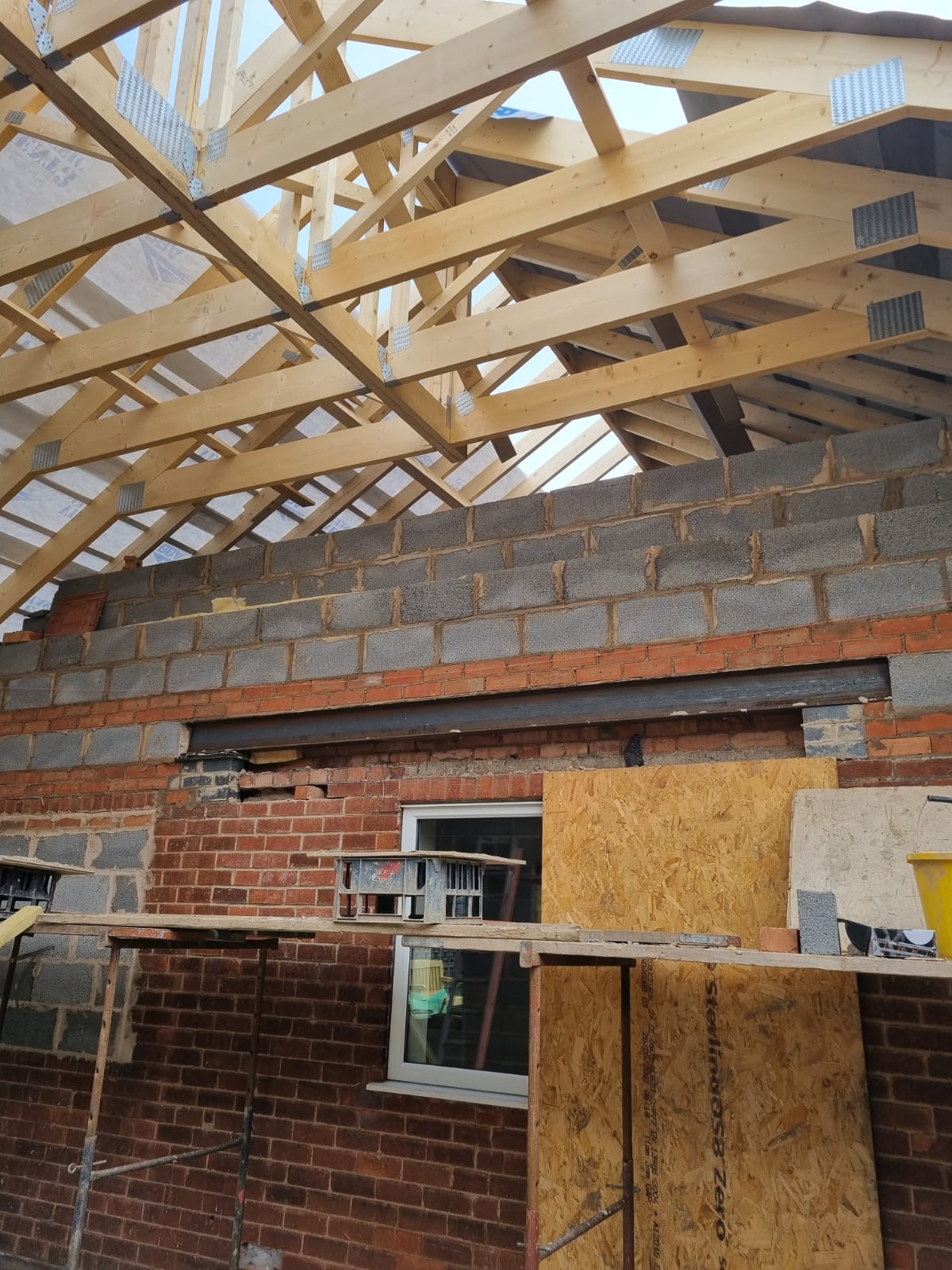
The first person you’ll need is an architect or a designer, someone who can sketch your dream into technical drawings. Buildworks Mansfield work with several local architects, if you’d like more advice, give Dave a call or send a website message. You can wait a little longer than expected – perhaps between 2 and 6 weeks just to get booked in, especially around Mansfield, Sutton-in-Ashfield, and Hucknall.
Once engaged, it takes another 2 to 4 weeks to draw up initial plans. If you’re in a conservation area like Edwinstowe or have quirks in your land like on a slope in Kirkby-in-Ashfield, budget even more time for that early-stage prep. Your architect should ideally liaise with your builder to make sure the design is good to construct and within budget.
Planning begins with understanding your goals for the home. Consider how the space should support your lifestyle, then review the structural possibilities that match your plot. Dave offers an initial on-site review to discuss layouts, design ideas, and build requirements.
Major Replacement May Need Planning Permission
Did you know? It’s often advised to get any planning paperwork in early, ideally the same day your architect finishes the drawings.
If your extension falls outside permitted development, something lofty like a two-storey rear extension in Calverton or you’re converting a garage to a ground level apartment in Mansfield Woodhouse with slate roof tiles, you’ll usually need to apply for planning permission. That’s 8 weeks minimum. And yes, it’s 8 full weeks even if your neighbour signs off in five minutes.
Now Book Your Builder (Before Permission is Granted)
Here’s the part most people don’t realise—builders book up fast. If you’ve got your eye on a reputable builder like Buildworks Mansfield, book the slot even while your application is in motion. Most of our large-scale extension work in places like Clipstone, Arnold and Beeston is scheduled at least 2 to 4 months ahead. Sometimes longer in peak months. Waiting until you get permission is often too late to get the start date you want.
Buildworks Mansfield: Construction Company with nearly 40 Years Experience
A standard single-storey extension, once we’re up and running, can take anywhere between 10 to 16 weeks depending on weather, scope, and finish level. Two-storey extensions? Closer to 20. Add time for roofers, electricians, plumbers, and joiners—all of whom need to be scheduled like a military operation. We’ve done this hundreds of times across Mansfield, Heanor, and Long Eaton. We manage it because we plan it like clockwork.